Political direction
The party emphasises national sovereignty, domestic ownership of strategic assets, regional development, more conservative social policy and caution about the influence of outside institutions.
New Zealand First Party
Also known as: New Zealand First, NZ First
A party with nationalist and socially conservative leanings. Its 2026 themes emphasise economic nationalism, domestic ownership and political sovereignty.
The party emphasises national sovereignty, domestic ownership of strategic assets, regional development, more conservative social policy and caution about the influence of outside institutions.
Argues for breaking up electricity companies that both generate and sell power, so that generation and retail pricing are separated.
Proposes breaking the market dominance of the two major supermarket groups to increase competition in the grocery market.
Citizens would be enrolled in KiwiSaver automatically at birth, with a NZ$1,000 government contribution.
Argues for buying back the Bank of New Zealand, and opposes further privatisation or sale of strategic assets.
Argues for limiting the vote in national elections to citizens, and for a referendum on the Māori electorate seats.
Argues for a national interest test before accepting agreements from the United Nations and its agencies that would limit domestic decision-making, and emphasises that domestic law comes first.
Verification note: Ministry of Health material confirms that the government rejected the 2024 amendments to the International Health Regulations, but that decision belongs to the government as a whole and cannot be attributed to New Zealand First alone.
In September 2025 New Zealand First invoked the coalition agree-to-disagree provision over new residence pathways for existing migrant work visa holders.
Verification note: This records a 2025 coalition disagreement and has not been republished as a 2026 campaign promise.
New Zealand First said it would support extending existing work visas for workers already in New Zealand by three years to meet short-term demand, rather than granting residence.
Verification note: The position comes from the same 2025 statement and has not been republished as a 2026 immigration policy.
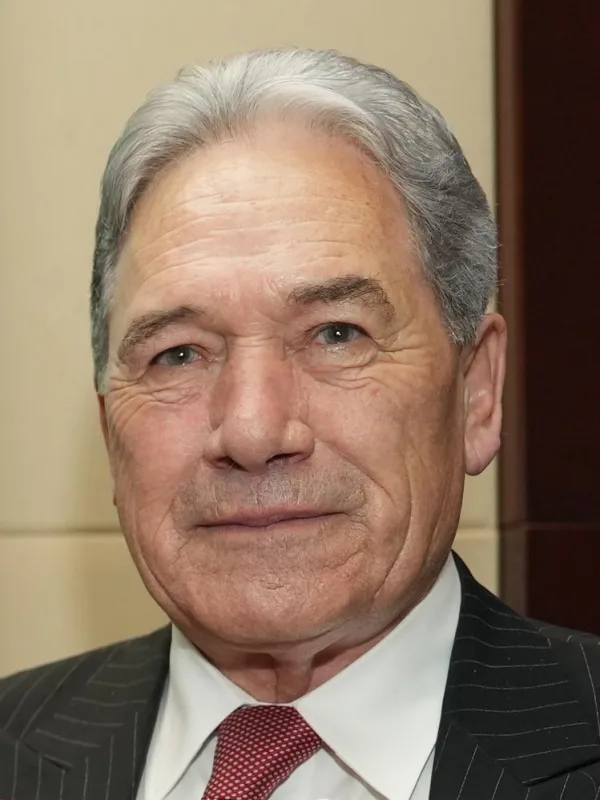
Party leader, Deputy Prime Minister, Minister of Foreign Affairs
UK Foreign Office, CC BY 2.0
Deputy leader
New Zealand Government, CC BY-SA 4.0On 5 October 2026, the government said the fast-track application for the Northland Shipyard and Dry Dock at Marsden Point had been accepted as complete by the Environmental Protection Authority and would go to an independent expert panel. Cabinet has ring-fenced $100 million from the Regional Infrastructure Fund for the project.
PartyMap has not yet found an independent official assessment directly tied to this record.
In the State of the Nation speech the party leader set out policy on energy, banking, supermarket competition, retirement savings and national sovereignty.
PartyMap has not yet found an independent official assessment directly tied to this record.
The government accepted or partly accepted all of the Finance and Expenditure Committee's recommendations, with the Treasury coordinating monitoring. The inquiry was a cross-party process, and the government response does not attribute the outcome to New Zealand First alone.
PartyMap has not yet found an independent official assessment directly tied to this record.
The party has long emphasised rail and ferry infrastructure. KiwiRail recorded the final settlement, a total project cost of NZ$671 million and a 2029 target for replacement ferries. This project record is not an independent assessment of the party's promises.
PartyMap has not yet found an independent official assessment directly tied to this record.
New Zealand First returned to Parliament at the 2023 general election with 8 seats and joined the National-led coalition government.